Skip to content
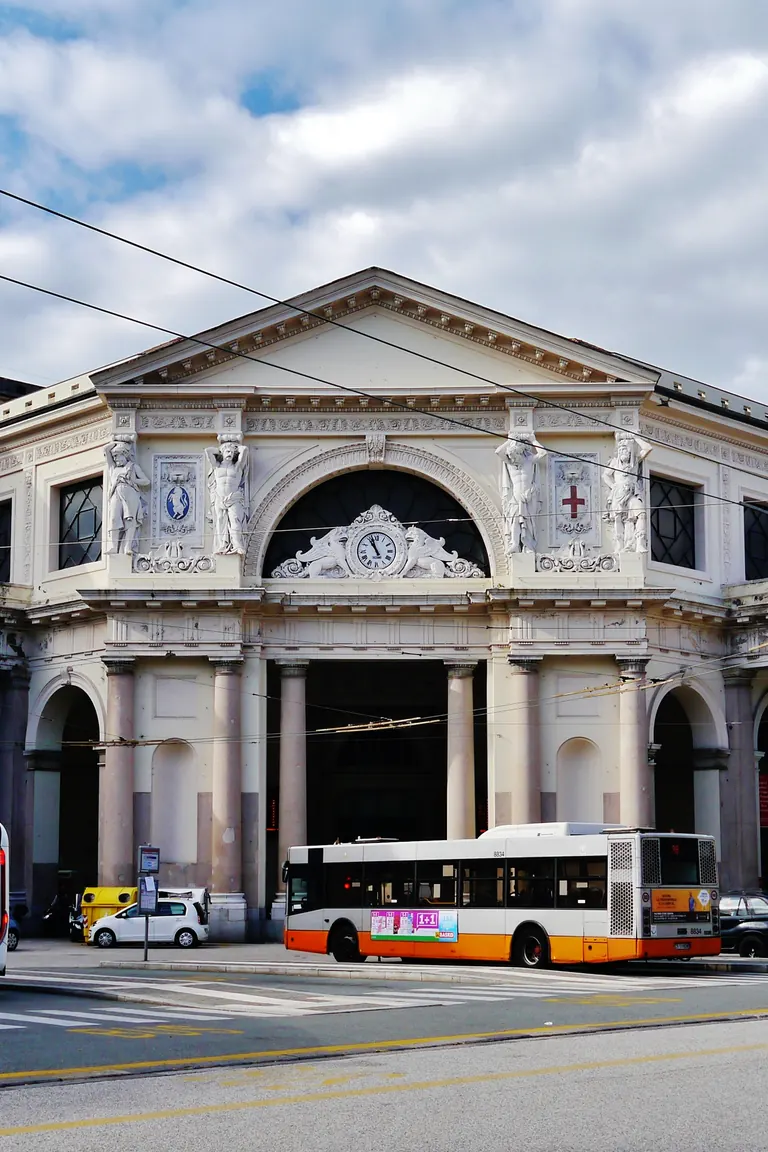
Exterior of Genova Piazza Principe railway station
Piazza Acquaverde · Genoa · Since 1860

Genova Piazza Principe

Genoa’s railway gateway: a Neoclassical station welcoming visitors to the city for more than a century and a half.

Explore NikRooms accommodation

Photo: Zairon · Wikimedia Commons · CC BY-SA 4.0 · resized and converted to WebP; mobile version cropped
Overview

Genoa’s main railway station

◆

Genova Piazza Principe, usually known simply as ‘Principe’, is the city’s main railway station. It occupies a strategic position beside the old town and harbour, with its entrance on Piazza Acquaverde, along the entire northern side of Via Andrea Doria.

It is a natural arrival point for those reaching Genoa by train from Turin, Milan, the Tyrrhenian coast or the western Riviera, and an ideal starting point for exploring the Strade Nuove, the Palazzi dei Rolli and the Royal Palace, a few minutes’ walk along Via Balbi.

Tens of thousands of people pass through every day, but the building also tells the story of Italian railways: opened in 1860, it has been enlarged and redesigned several times without losing its nineteenth-century character.

1860

year of opening, one year before Italian unification

~24 million

passengers each year

~300

trains a day

11th

busiest Italian station by passenger numbers

Approximate figures reported by tourism and general-interest sources; they may change over time.

History

From temporary station to metropolitan interchange

Principe’s history follows that of Liguria’s railways and Genoa’s growth as a port and modern city.

I
1854 – 1860

The beginnings

The Turin–Genoa railway opens in February 1854, but Genoa still has only a temporary station, the terminus of the new line.

Architect Alessandro Mazzucchetti designs the permanent station, which opens in 1860 with a large single-span steel vault resting on buildings at either side, in a restrained Neoclassical style with a Doric portico.

II
1900 – 1916

Modernisation

A sharp increase in traffic makes expansion necessary. In 1900 engineer Giacomo Radini Tedeschi reorganises the tracks, changing passenger flows and the use of interior spaces.

The main concourse loses its central role to a new off-centre entrance hall, and in 1916 the line is electrified using the three-phase system.

III
1950–today

A metropolitan interchange

Further expansions follow in the 1950s and 1990s. In 1993 the underground rail link between Brignole and Sampierdarena opens, with Principe’s new underground station and its two tracks.

In recent years, Grandi Stazioni has carried out refurbishment and redesign work.

Timeline
1854

The temporary station

With the opening of the Turin–Genoa line, the city gains its first railway station, still a temporary one.

1860

Mazzucchetti’s station opens

The Neoclassical building with its great steel vault is completed and becomes a symbol of the city’s technological progress.

1862

The Columbus monument

The monument to Christopher Columbus is dedicated in Piazza Acquaverde, opposite the station, the first the city erected to the navigator.

1900

Radini Tedeschi’s plans

The tracks and passenger flows are reorganised, with an off-centre entrance hall.

1916

Electrification arrives

The network is electrified using the three-phase system.

1992

The metro

Genoa’s Principe metro station opens, connected to the railway station.

1993

The underground rail link

The underground connection between Brignole and Sampierdarena begins operating, with Principe Sotterranea station.

The building

A building on several levels

◆

Today’s station is the result of almost two centuries of development. Its nineteenth-century core can be recognised in the restrained façade, Doric portico and sculptural façade decoration. Alongside it are the early twentieth-century canopies over the through tracks and the upper concourse.

Principe now extends over several levels: below ground are the through railway line and the metro connection; at street level, the large concourse and tracks; on the upper floors, mainly offices. The station also includes the tracks of the former terminus.

Many travellers see the building almost as a monument: more than a piece of infrastructure, it is the first impression Genoa makes on arriving visitors.

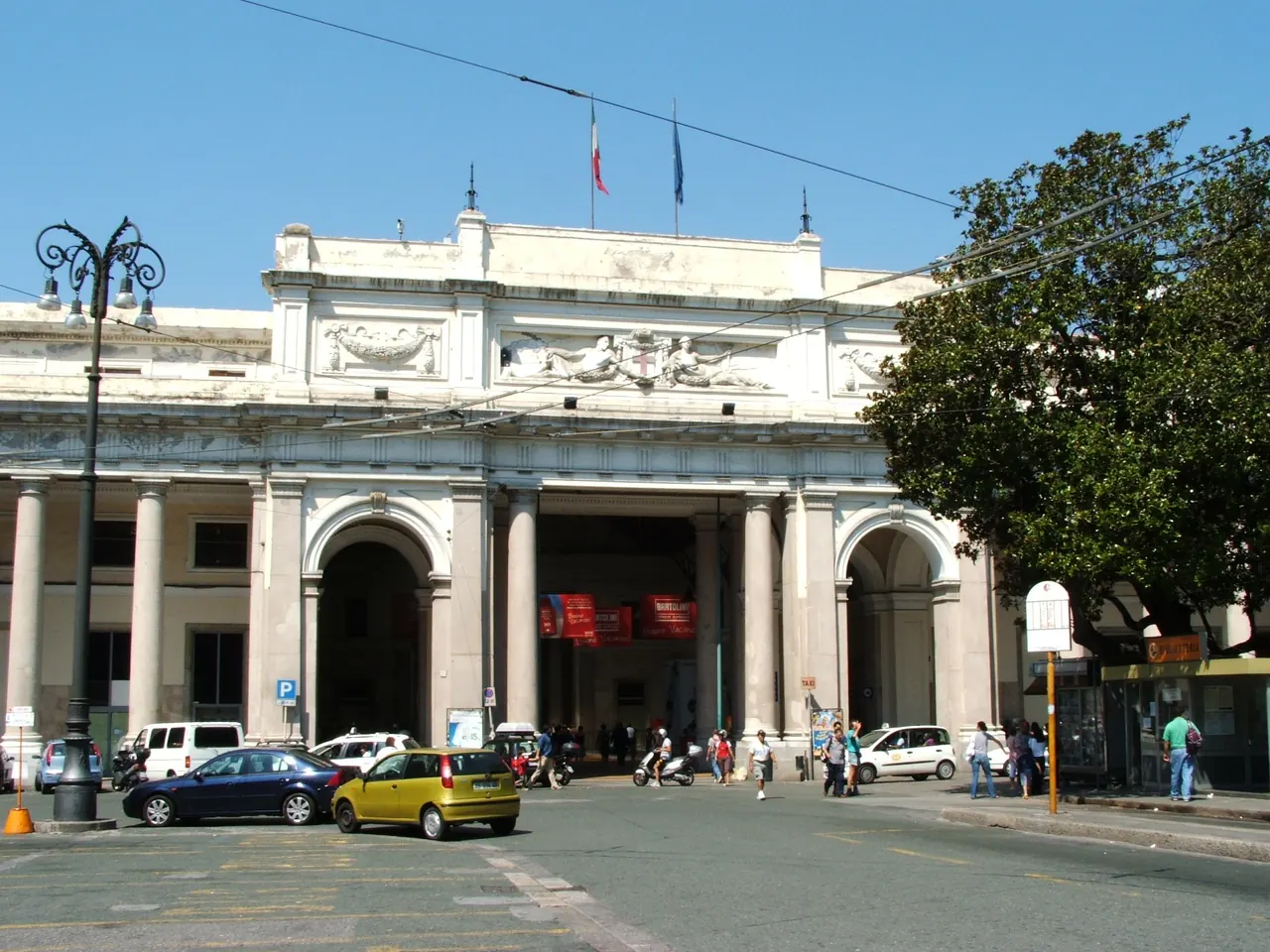
The entrance to Genova Piazza Principe station
The station entrance. Photo: Twice25 e Rinina25, Twice25 e Rinina25 · Wikimedia Commons · CC BY 2.5 · resized and converted to WebP (CC BY 2.5).
The name

Why is it called ‘Principe’?

◆

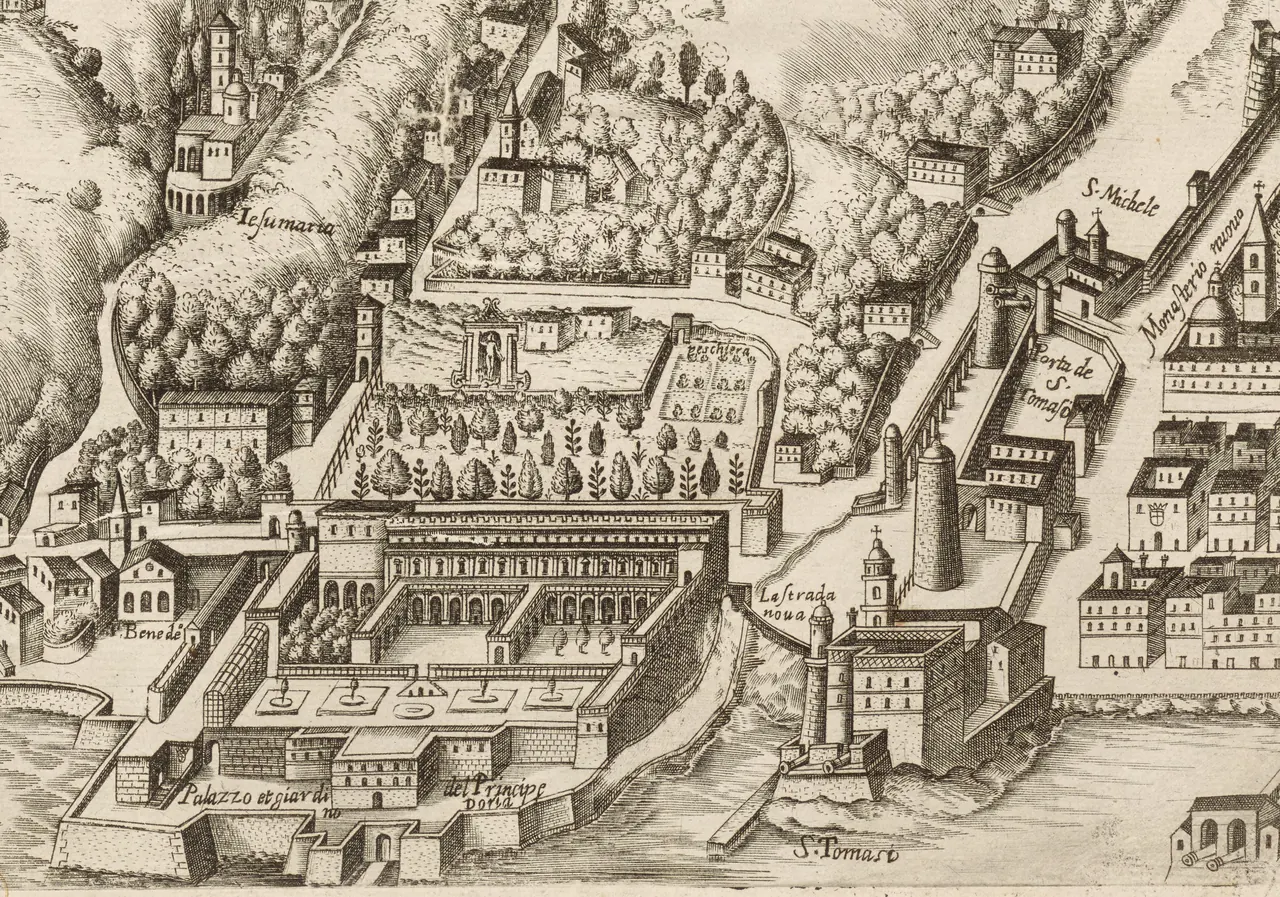
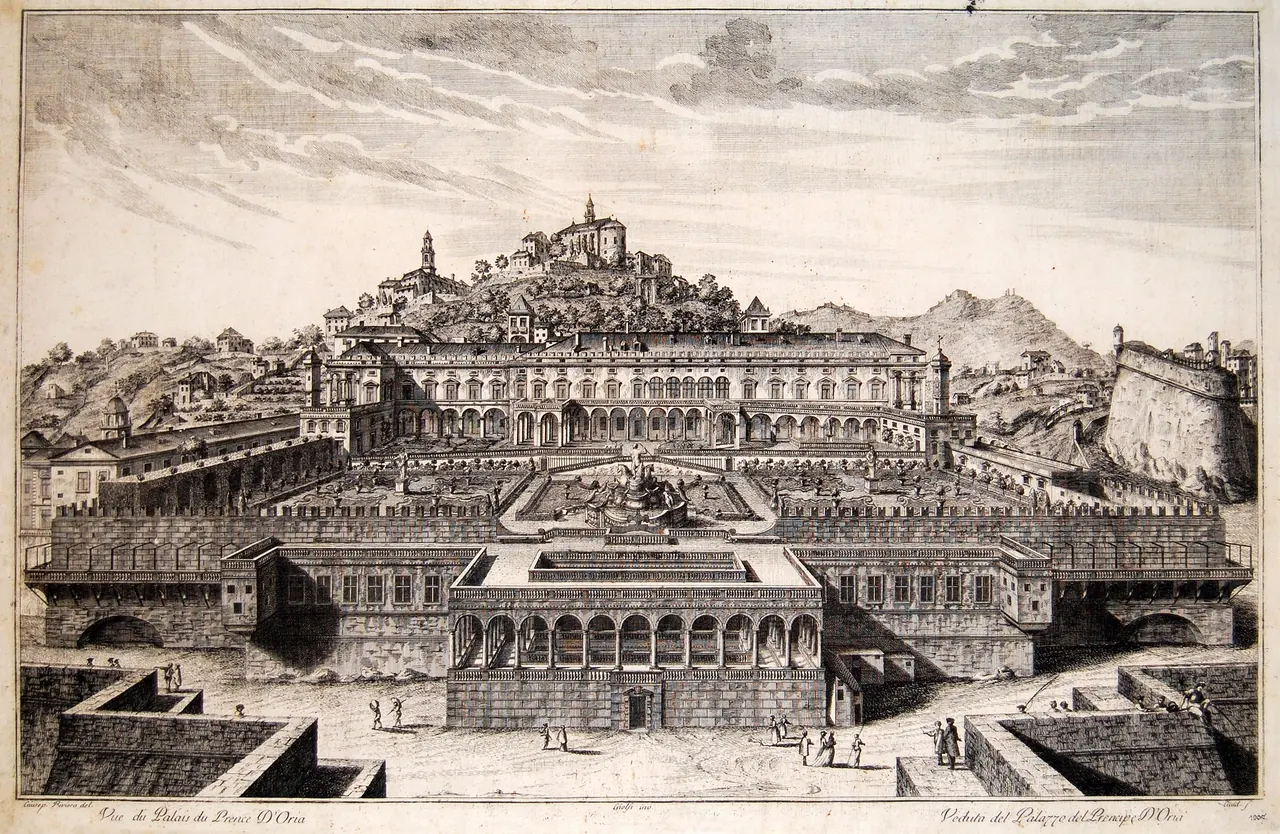
The name does not come from the square it faces, Piazza Acquaverde, but from the nearby Palazzo del Principe, now known as Villa del Principe, in the Fassolo district. This residence was built for Andrea Doria, admiral to Charles V, from the 1520s onwards, outside the city walls. Sovereigns and diplomats were received here, and the villa has been described as the only true ‘court’ the Republic of Genoa ever knew.

The villa’s park extended down to the sea, where Doria also had a private landing place. In the nineteenth century the railway and station cut through part of the garden, and the later passenger terminals replaced the private harbour. The villa still belongs to the Doria Pamphilj family and is open to visitors as a museum.

Seventeenth-century view of Villa del Principe at Fassolo
Villa del Principe in 1637, detail from Alessandro Baratta’s view of Genoa. Alessandro Baratta · Wikimedia Commons · Public domain · resized and converted to WebP
Eighteenth-century engraving of Prince Doria’s palace at Fassolo
Doria’s palace at Fassolo, engraving made before 1769. Antonio Giolfi, Giuseppe Riviera (draughtsman), Giovanni Lorenzo Guidotti (engraver). · Wikimedia Commons · Public domain · resized and converted to WebP

This is why searching for ‘Piazza Principe’ on a map leads to the square beside the villa, a short distance away; the station’s main entrance, however, opens onto Piazza Acquaverde. You may occasionally hear ‘Porta Principe’, but the correct name is Genova Piazza Principe.

Nearby

What to see as you leave the station

Principe is an excellent starting point for a first walk through Genoa’s historic and Baroque heart.

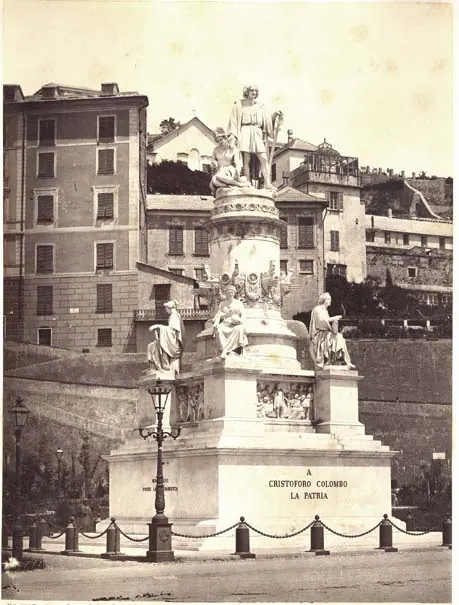
Historic photograph of Genoa’s Columbus monument
The Columbus monument in a historic photograph by Giorgio Sommer. Giorgio Sommer · Wikimedia Commons · Public domain · resized and converted to WebP (public domain).

Piazza Acquaverde and the Columbus monument

As you leave the station you step straight into Piazza Acquaverde, dominated by the Christopher Columbus monument: the city’s first monument to its navigator, unveiled in 1862. It is a meeting place and landmark for the whole area.

Via Balbi and the Royal Palace

From Piazza Acquaverde it is easy to reach Via Balbi, one of the city’s great Baroque streets. At number 10 stands the Royal Palace, once home to the Balbi, Durazzo and Savoy families, now a national museum. Explore our guide to the Royal Palace.

Villa del Principe

A short distance away is Andrea Doria’s residence, from which the station takes its name, with its garden and frescoed rooms.

Strade Nuove and Palazzi dei Rolli

Continuing towards the centre brings you into the UNESCO World Heritage area of the Strade Nuove, including Via Garibaldi, the quintessential ‘New Street’.
Did you know?

Things you may not know

Acquaverde

It is not in ‘Piazza Principe’

The station takes its name from the nearby Palazzo del Principe, but its main façade faces Piazza Acquaverde. Piazza del Principe is a different square, beside the villa and passenger terminal.

1860

Before Italian unification

The station opened in 1860, a year before the proclamation of the Kingdom of Italy, when Genoa was still part of the Kingdom of Sardinia.

Steel

A great single-span vault

The original design featured a single-span steel vault, a modern and spectacular solution for its time, supported only by the buildings on either side.

1s · 2s

Trains beneath the station

Some regional trains leave from the underground platforms, numbered ‘1s’ and ‘2s’, at Principe Sotterranea station, opened in 1993.

1898

The Granarolo rack railway

The Principe–Granarolo rack railway starts nearby. Opened in 1898 and reopened after refurbishment in 2012, it offers a different way to climb the city’s hills.

Columbus

The navigator at the exit

The Christopher Columbus monument in Piazza Acquaverde greets travellers leaving the station, a reminder that Genoa is the navigator’s birthplace.

Useful information

Getting around from Principe

Genova Piazza Principe railway station
Piazza Acquaverde
16126 Genoa

The station connects to the Genoa metro at Principe, to city buses and, a short distance away, to the passenger terminal.

Official RFI station information

Train times, services, works and accessibility may change: always check the RFI and Trenitalia websites before travelling. Step-free access to every platform is not guaranteed from every part of the station.

From the station you can reach

  • cities served by the lines to Turin, Milan, Pisa, Ventimiglia and Acqui Terme;
  • the old town and the Strade Nuove, on foot or by metro;
  • the Royal Palace and Via Balbi, a few minutes’ walk away;
  • the Granarolo hills by rack railway.

The metro connects Principe to the old town and, following the extension opened in 2012, as far as Brignole.

Before your visit

For admission, any booking requirements and up-to-date information, consult RFI — Genova Piazza Principe.

Where to stay when visiting Genova Piazza Principe

San Carlo is in the Via Balbi area, while San Luca is in the old town. Before arriving, plan your route to the address of your booked accommodation, especially if you are travelling with luggage.

The distances given are estimated walking distances and may vary depending on the route and entrance chosen.

Choose your accommodation in Genoa

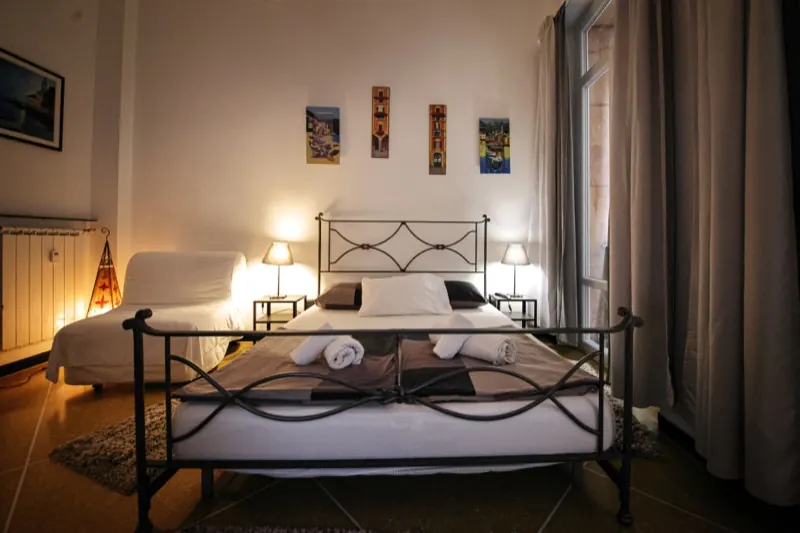
San Luca 1 – Budget Comfort — San Luca, Genoa

Rooms and studio

San Luca

Three rooms and a studio with a fully equipped kitchen: choose the option that suits your stay at San Luca.

Up to 3 guests per unit

View accommodation
San Carlo Apartment — San Carlo, Genoa

Apartment

San Carlo

An apartment with a bedroom, living room and separate kitchen, for guests looking for more space during their stay in Genoa.

Up to 5 guests

View accommodation

Plan your stay in Genoa

Tell us your dates, number of guests and preferred accommodation: we will confirm availability and the price by email.

info@nikrooms.com · +39 375 622 2446 · WhatsApp

Your request opens in your email app. Pets are not permitted.

Sources and credits

Information drawn from Italia.it, Wikipedia, Musei di Genova and other general-interest sources, and freely reworded. Traffic figures are approximate, and track numbers vary according to the source and what is counted (surface tracks, former terminus tracks or the underground through line).

The photographs are hosted on this website in WebP format and in several sizes. Authors, sources and licences are given alongside each image. Modifications: resizing and conversion to WebP; the cover image has a cropped mobile version, and the displayed crop depends on the screen. This is an unofficial page for information purposes.

Availability inquiry

Your inquiry opens in your email app. We confirm availability and price by reply.