Skip to content
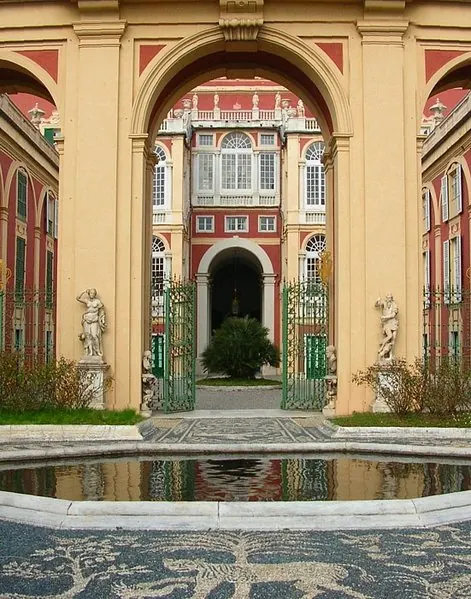
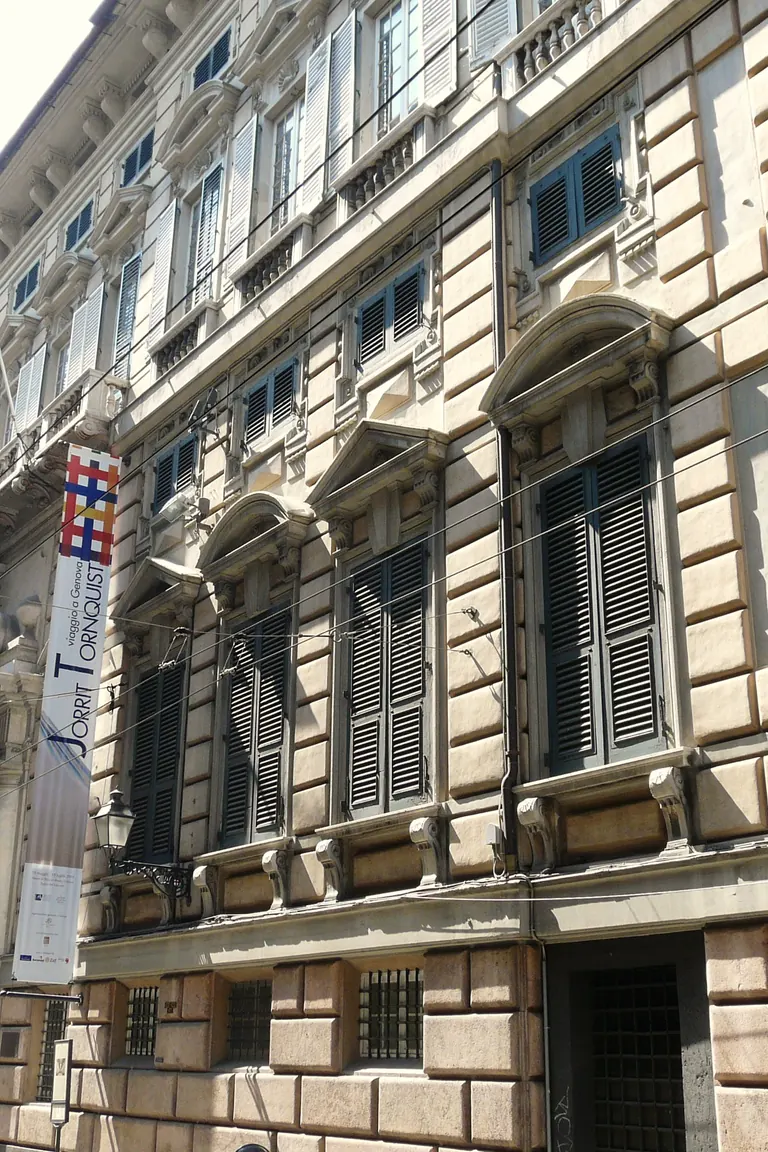
Façade of the Royal Palace of Genoa on Via Balbi
Via Balbi 10 · Genoa · UNESCO World Heritage

Royal Palace of Genoa

From merchants’ and bankers’ residence to a palace of the House of Savoy: three centuries of power, art and Baroque splendour.

Explore NikRooms accommodation

Photo: Davide Papalini · Wikimedia Commons · CC BY-SA 3.0 · resized and converted to WebP; mobile version cropped
Overview

A royal palace at the heart of the Strade Nuove

◆

The Royal Palace, also known as Palazzo Stefano Balbi, is one of Genoa’s largest architectural complexes from the seventeenth and eighteenth centuries. It stands on Via Balbi, a short walk from Genova Piazza Principe station, and now houses the Royal Palace Museum, part of the National Museums of Genoa.

Its appeal lies in the survival of its state rooms, complete with frescoes, stucco work, paintings, sculptures, furniture and furnishings belonging to the families who lived here. It is more than a neutral setting for artworks: it is a historic house museum where you walk through history.

Only three dynasties have owned it: the Balbi, who built it, the Durazzo, who enlarged it and gave it its spectacular appearance, and the House of Savoy, who made it their Genoese residence in the nineteenth century and gave it the name we know today.

History

Three families, three eras

From the Republic of Genoa to the Kingdom of Sardinia and then the Italian state, the palace’s history reflects that of the city.

I
1643 – 1679

The Balbi

The Balbi, a family of merchants and financiers, obtained new plots from the Republic along the street that now bears their name. On 4 February 1643, Stefano Balbi submitted plans for the building, opposite the Church of San Carlo.

Work, entrusted to Pier Francesco Cantone, Michele Moncino and Giovanni Angelo Falcone, was completed around 1650. The earliest decoration includes work by Giovan Battista Carlone, Valerio Castello and the Bolognese artists Angelo Michele Colonna and Agostino Mitelli, among others.
II
1679–early nineteenth century

The Durazzo

In 1679 Eugenio Durazzo bought the palace and redecorated many of its rooms. The east wing, the long façade on Strada Balbi and the Teatro del Falcone date from this period.

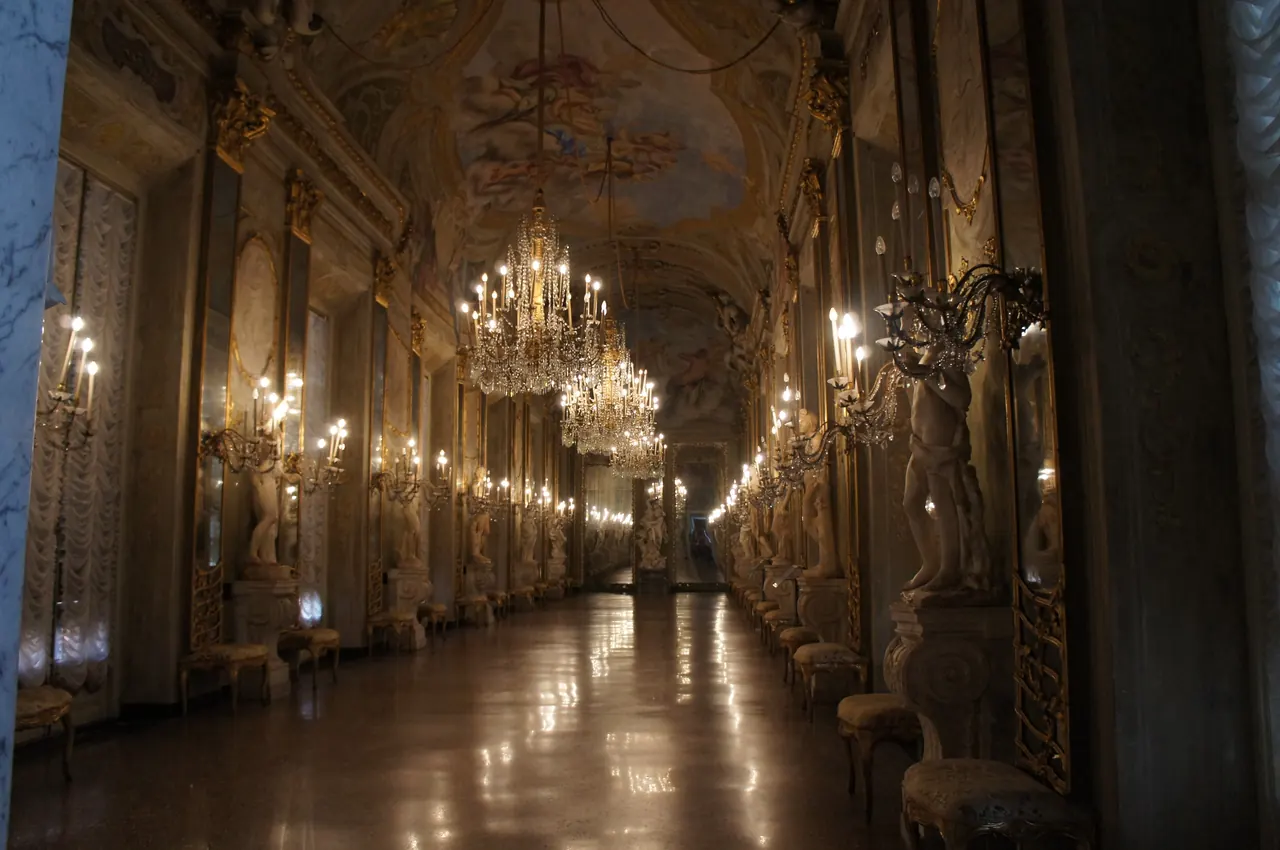
In the first half of the eighteenth century, two grand staircases, a large U-shaped terrace, an enlarged ceremonial courtyard and the celebrated Hall of Mirrors were added. Facing financial difficulties in the early nineteenth century, the Durazzo decided to sell.

III
1824 – 1919

The House of Savoy

In 1824 the palace passed to Charles Felix, King of Sardinia, and has been known as the Royal Palace ever since. The Throne Room, Audience Chamber, Ballroom and royal apartments were created; the new decoration was entrusted to professors from the Accademia Ligustica.

In 1919 Victor Emmanuel III transferred the palace to the Italian state.

Timeline
1643

Stefano Balbi’s plans

The financier submits plans for a new residence on the route that would become Strada Balbi.

1650

The first palace is completed

The seventeenth-century building is still confined to what is now the central block.

1679

The Durazzo arrive

Eugenio Durazzo buys the palace and begins extensions and new decorative schemes that continue for decades.

1784

An imperial visit

Joseph II of Habsburg stays in Genoa and is hosted at the palace, with a memorable banquet in the Hall of Mirrors.

1824

The palace becomes royal

Charles Felix of Savoy, King of Sardinia, purchases the building, which Napoleon Bonaparte had also shown an interest in buying.

1919

Transfer to the state

Victor Emmanuel III transfers the palace to the Italian state; it becomes a museum in the following years.

2006

UNESCO recognition

The palace joins the World Heritage site ‘Genoa: Le Strade Nuove and the system of the Palazzi dei Rolli’.

2023

The Hall of Mirrors is reborn

After more than a year of restoration, the gallery reopens to the public on 24 November.

How it was used

From merchants’ home to royal court

◆

Patrician residence. In the seventeenth century it was above all a statement of wealth: the Balbi, who had risen through trade and finance, wanted a palace that would convey their status to the Republic and Europe.

Palace for official hospitality. It was one of the Palazzi dei Rolli, noble residences that the Republic placed on special lists to host distinguished official visitors to Genoa in rotation and at the owners’ expense. This duty of hospitality also helps explain the grandeur of its decoration.

Savoy royal palace. After 1824 it accommodated the sovereigns during their visits to the city: kings and queens occupied the east-wing apartments, while the west wing was the residence of Ferdinand, Duke of Genoa, Charles Albert’s second son.

National museum. Since its transfer to the state it has been a historic house museum preserving state rooms, furnishings and more than a hundred paintings. Since 2024, the Royal Palace and Palazzo Spinola have together formed the National Museums of Genoa.

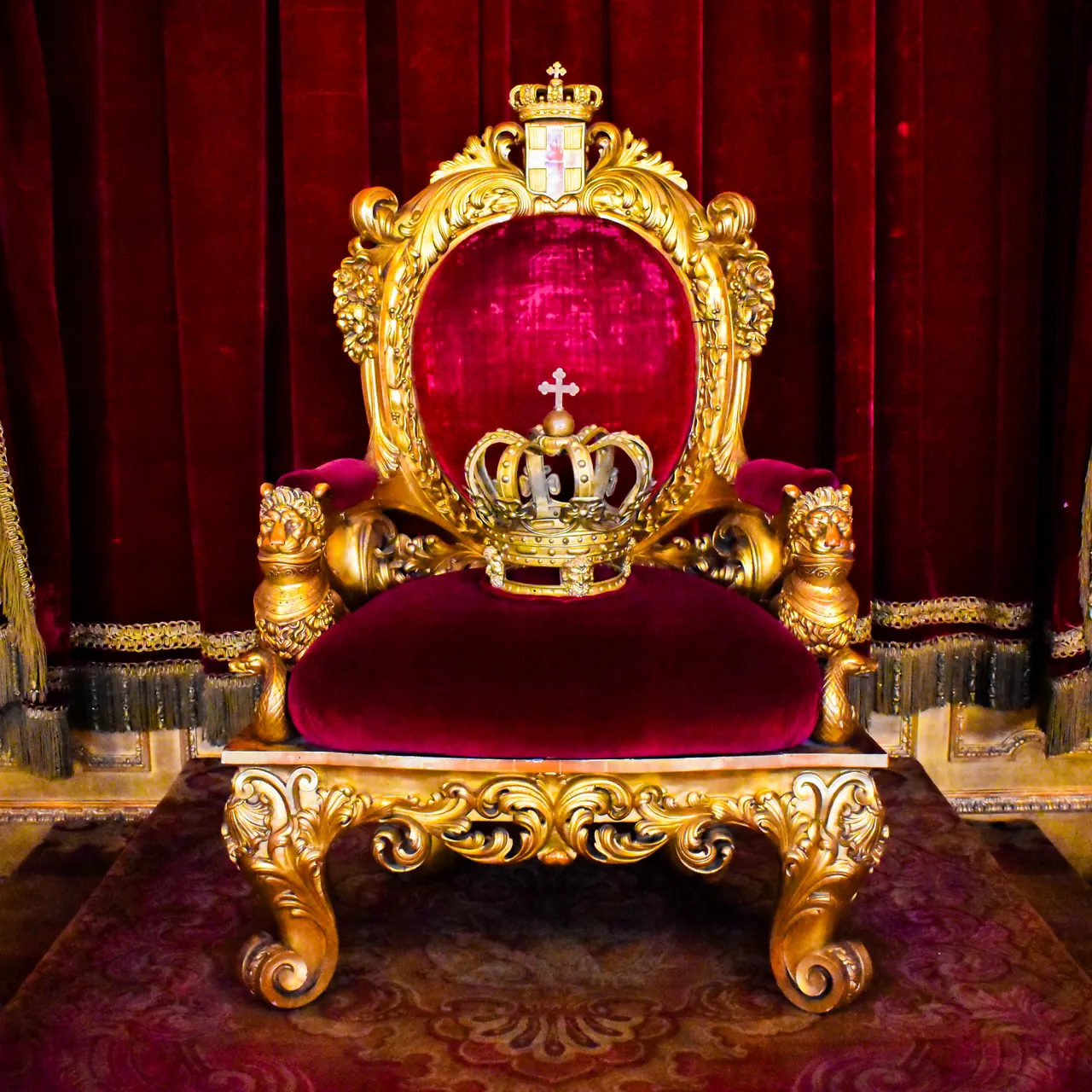
The throne in the Royal Palace of Genoa
The throne – a reminder of the Savoy period. Julian Lupyan · Wikimedia Commons · CC0 · resized and converted to WebP
The rooms

A journey through mirrors, stucco work and frescoes

The museum occupies the grand apartment on the second floor, whose state rooms survive almost intact.

The Hall of Mirrors
The Hall of Mirrors – the palace’s emblem. Superchilum · Wikimedia Commons · CC BY-SA 4.0 · resized and converted to WebP
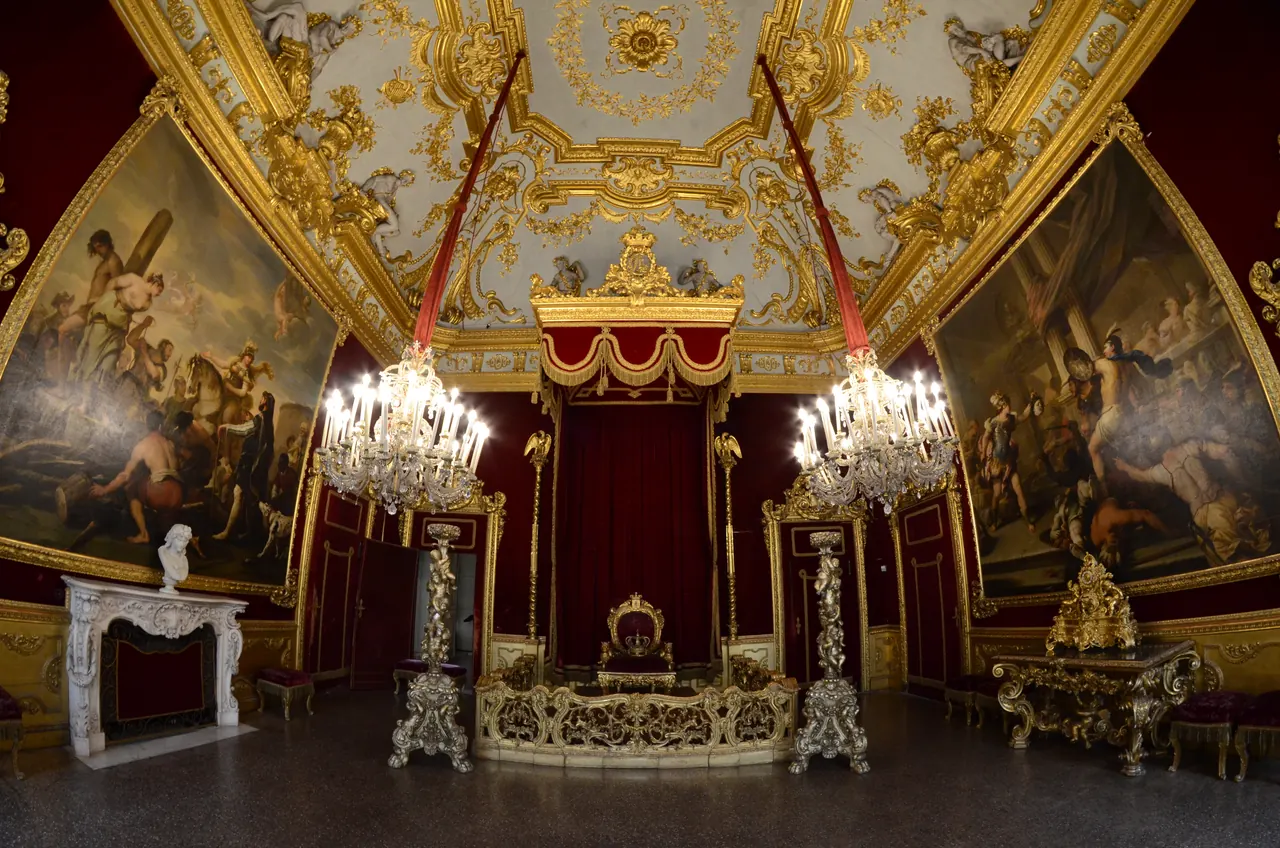
The Throne Room
The Throne Room, furnished by the House of Savoy. Steven Lek · Wikimedia Commons · CC BY-SA 4.0 · resized and converted to WebP
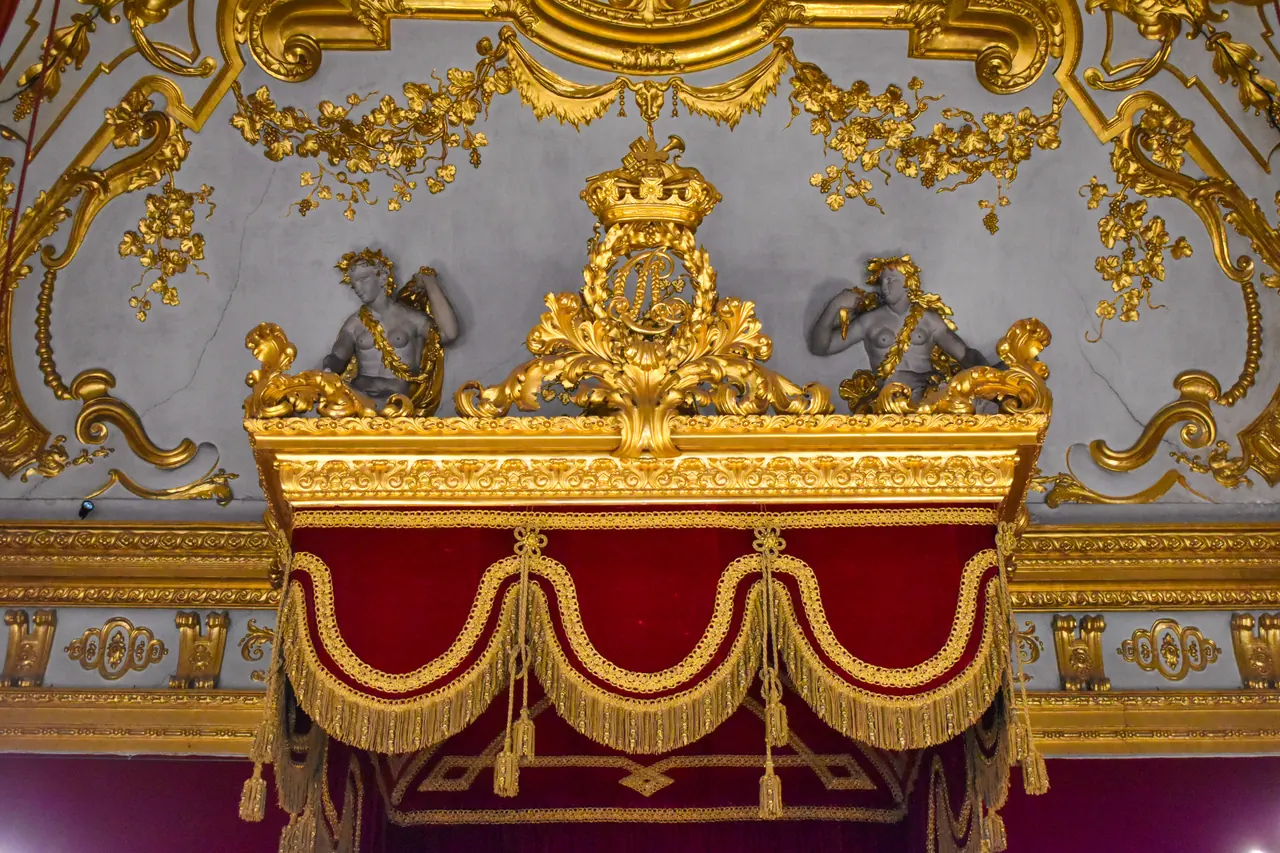
The decorated ceiling of the Throne Room
The ceiling of the Throne Room. Julian Lupyan · Wikimedia Commons · CC0 · resized and converted to WebP
The hanging garden of the Royal Palace
The hanging garden, overlooking the harbour. Idéfix · Wikimedia Commons · CC BY-SA 3.0 · resized and converted to WebP

Entrance hall and ceremonial courtyard

The theatrical entrance hall, with its eighteenth-century stucco work, leads to the ceremonial courtyard, enlarged by the Durazzo, from which grand staircases ascend to the principal floors.

Hall of Mirrors

Just under thirty metres long, it was inspired by the galleries of Rome’s Palazzo Colonna and Palazzo Doria Pamphilj and the Galerie des Glaces at Versailles. Marble, stucco work, statues and mirrors multiply the light. The frescoes are by Domenico Parodi.

Throne Room and Audience Chamber

Created by the House of Savoy in the nineteenth century, these were the heart of court ceremony, where the sovereigns received guests and delegations.

Ballroom

Designed for court celebrations and receptions, it completes the suite of state rooms commissioned by the House of Savoy.

Valerio Castello Room and Chapel Gallery

The room takes its name from the artist who painted its frescoes; together with the Chapel Gallery, it belongs to the palace’s earliest decorative phases, dating from the Balbi and Durazzo periods.

Hanging garden

An elevated green terrace with traditional Ligurian pebble paving (risseu) and a nymphaeum, opening towards the city and sea.

The garden

‘Risseu’ and the sea on the horizon

◆

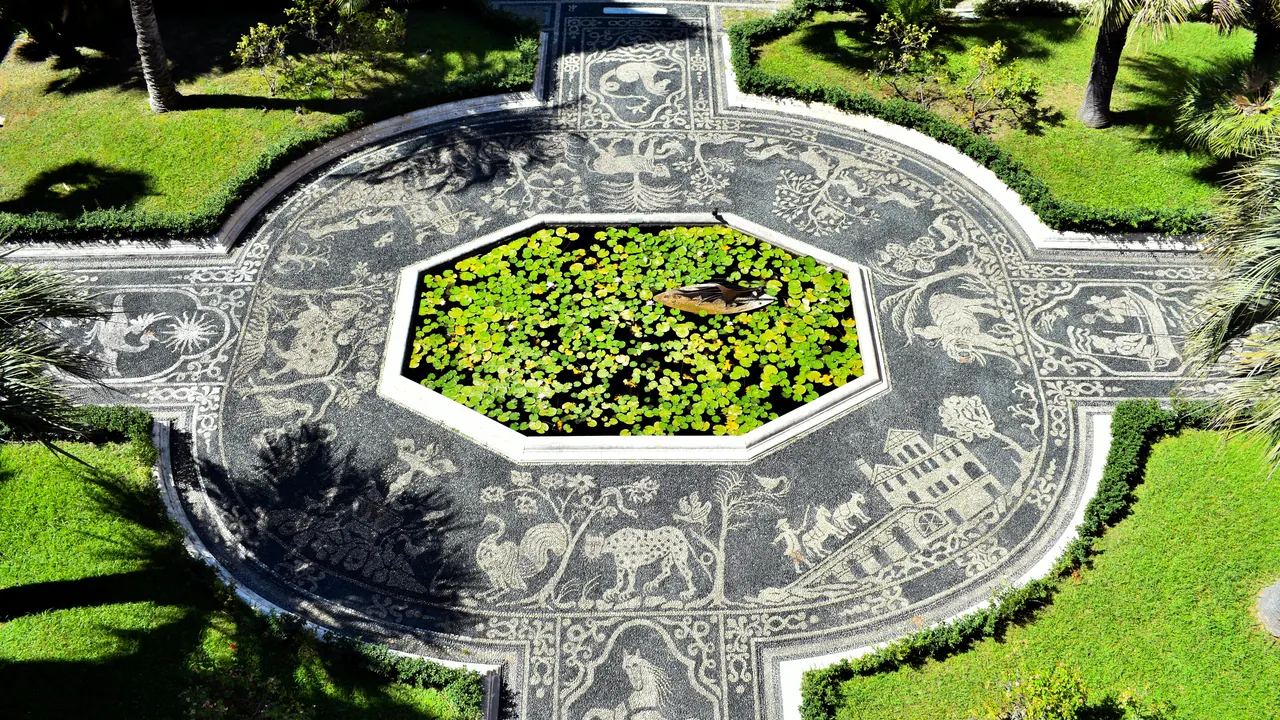
The hanging garden is one of the surprises along the route. Risseu are traditional Ligurian mosaics made from black and white pebbles, used to create geometric and decorative patterns on the floors of courtyards, churches and gardens.

Dramatic terraces, nymphaea and staircases are part of Genoese Baroque culture: squeezed between the sea and the hills, the city made up for its lack of space with gardens on several levels and terraces overlooking the harbour.

Risseu pebble paving in the Royal Palace garden
A risseu in the garden. Julian Lupyan · Wikimedia Commons · CC0 · resized and converted to WebP
Collections

Masterpieces from across Europe

◆

The museum preserves more than a hundred paintings, as well as sculptures, tapestries, Asian ceramics, painted silks and original furnishings. The collections reflect the international tastes of the families who lived here and include works from the Genoese, Flemish, Venetian, Emilian and Neapolitan schools.

Anton Van DyckTintorettoGuercinoLuca GiordanoFerdinand VoetBassanoBernardo StrozziIl GrechettoDomenico FiasellaGiovanni Battista GaulliFilippo Parodi (sculptures)Domenico Parodi (frescoes)Valerio Castello

Among the sculptures, works by the Genoese Baroque sculptor Filippo Parodi stand out, including Clytie and Venus, now on the visitor route. The House of Savoy also left an intriguing legacy: Charles Felix and Charles Albert moved many works to Turin, which is why part of the palace’s original collections is now elsewhere.

Did you know?

Things you may not know

~30 m

A gallery inspired by Versailles

The Hall of Mirrors draws inspiration from the Galerie des Glaces at Versailles and the galleries of Rome’s Palazzo Colonna and Palazzo Doria Pamphilj, yet its taste and decoration are thoroughly Genoese.

1784

An imperial banquet

Emperor Joseph II of Habsburg was welcomed to the palace with a grand banquet in the Hall of Mirrors itself.

Napoleon

A famous buyer who never was

In the early nineteenth century, when the Durazzo were in financial difficulty, Napoleon Bonaparte also took an interest in the palace. It was the King of Sardinia who eventually bought it in 1824.

−80%

New lighting, lower consumption

The restoration of the Hall of Mirrors, completed in 2023, improved the lighting’s energy efficiency, with an estimated reduction in electricity consumption of around 80%.

Rolli

Accommodation for distinguished guests

Like other palaces on the Strade Nuove, it was included in the Rolli, public lists of patrician residences required to host high-ranking visitors.

1

Genoa’s most visited museum

In 2024 the Royal Palace was reported as the city’s most visited museum, with around 300,000 visitors a year according to tourism promotion estimates.

World Heritage

The Strade Nuove and the Palazzi dei Rolli

◆

In 2006 UNESCO added ‘Genoa: Le Strade Nuove and the system of the Palazzi dei Rolli’ to the World Heritage List. The Royal Palace is part of the site, alongside many other noble residences in the old town: a rare example of planned urban development in the early modern period, where streets and palaces were designed together to express the Republic’s prestige.

The palace stands out because, unlike many seventeenth-century buildings, it preserves much of the interiors, furnishings and artworks used by the generations who lived here intact.

Visiting

Getting here

Royal Palace Museum
Via Balbi, 10
16126 Genoa

The palace is a few minutes’ walk from Genova Piazza Principe railway station, along historic Via Balbi, and can also be reached on foot from the old town.

Official website

Opening times, tickets, evening openings and exhibitions change throughout the year: always check the official website before visiting.

The visitor route includes

  • the monumental entrance hall with its eighteenth-century stucco work;
  • the ceremonial courtyard;
  • the hanging garden;
  • the grand second-floor apartment, with the Hall of Mirrors, Throne Room, Audience Chamber and Ballroom.

Nearby, Palazzo Spinola di Pellicceria houses the National Gallery of Liguria and belongs to the same National Museums of Genoa.

Before your visit

For admission, any booking requirements and up-to-date information, consult National Museums of Genoa — getting here.

Where to stay when visiting Royal Palace of Genoa

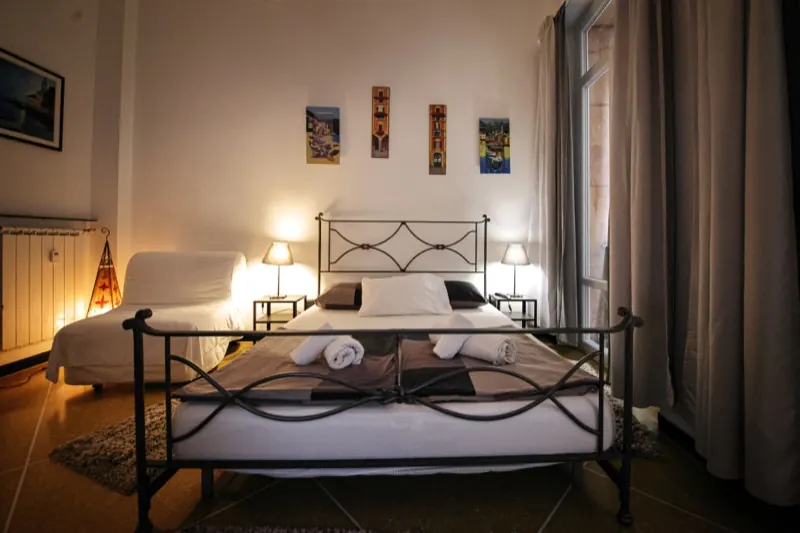
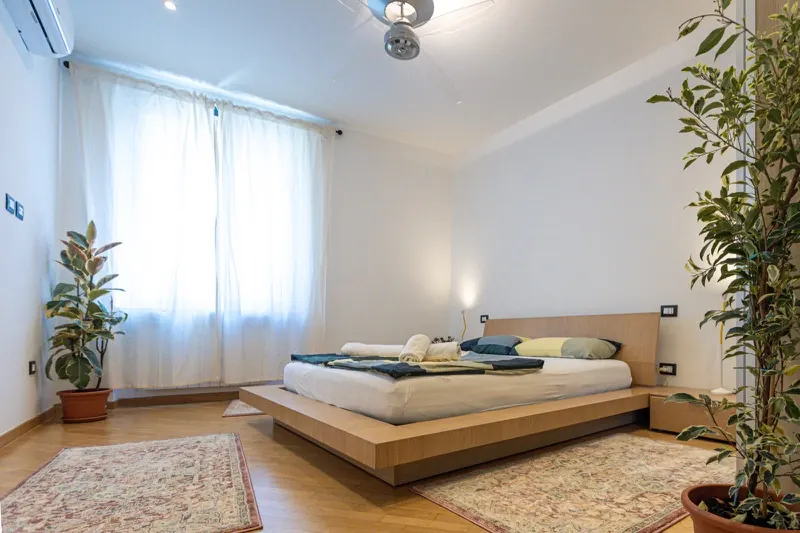
San Carlo is beside the Royal Palace, around 50 m on foot; the estimated walk from San Luca is about 700 m.

The distances given are estimated walking distances and may vary depending on the route and entrance chosen.

Choose your accommodation in Genoa

San Luca 1 – Budget Comfort — San Luca, Genoa

Rooms and studio

San Luca

Three rooms and a studio with a fully equipped kitchen: choose the option that suits your stay at San Luca.

Up to 3 guests per unit

View accommodation
San Carlo Apartment — San Carlo, Genoa

Apartment

San Carlo

An apartment with a bedroom, living room and separate kitchen, for guests looking for more space during their stay in Genoa.

Up to 5 guests

View accommodation

Plan your stay in Genoa

Tell us your dates, number of guests and preferred accommodation: we will confirm availability and the price by email.

info@nikrooms.com · +39 375 622 2446 · WhatsApp

Your request opens in your email app. Pets are not permitted.

Sources and credits

Historical information drawn from the official website of the Royal Palace of Genoa (Italian Ministry of Culture), Musei di Genova, the Rolli e Strade Nuove portal, Italia.it and other general-interest sources, and freely reworded. Dates may differ slightly between sources, for example for the start of construction and the purchase by the House of Savoy.

The photographs are hosted on this website in WebP format and in several sizes. Authors, sources and licences are given alongside each image. Modifications: resizing and conversion to WebP; the cover image has a cropped mobile version, and the displayed crop depends on the screen. This is an unofficial page for information purposes.

Availability inquiry

Your inquiry opens in your email app. We confirm availability and price by reply.