Skip to content
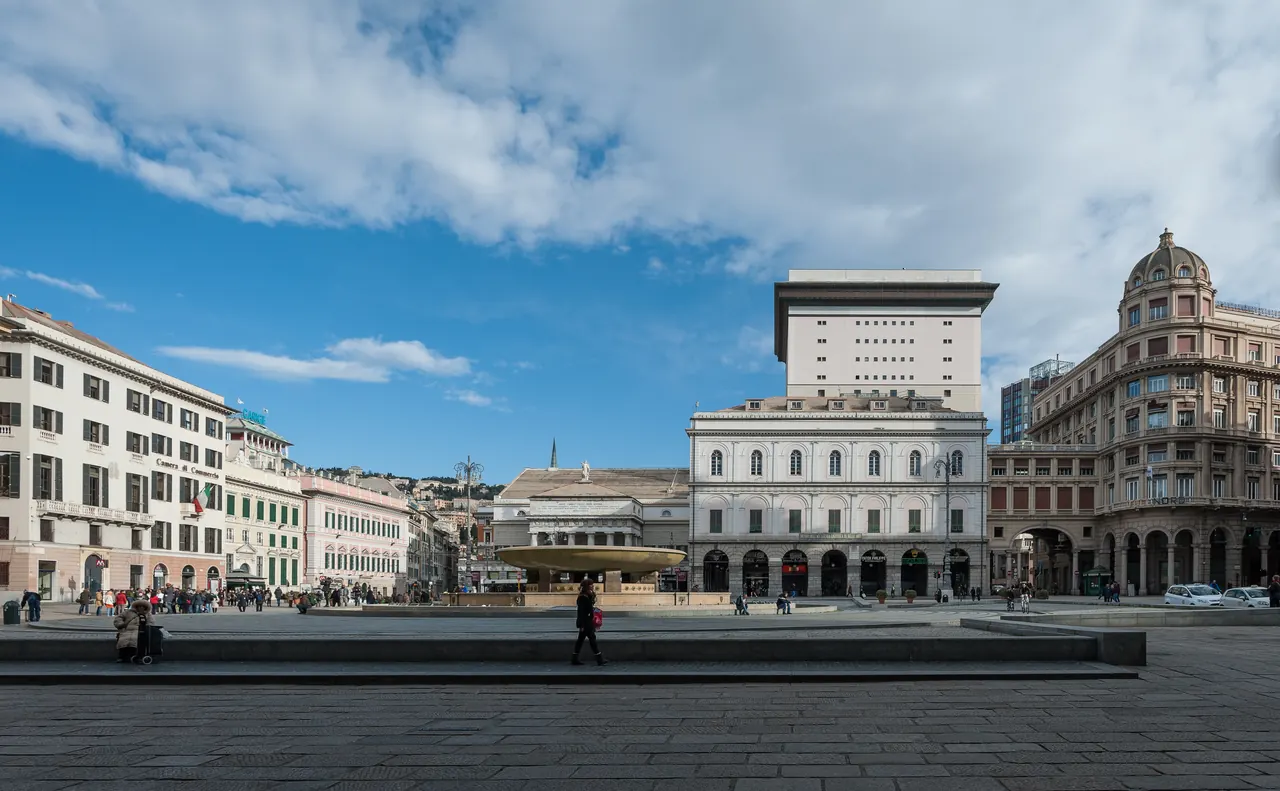
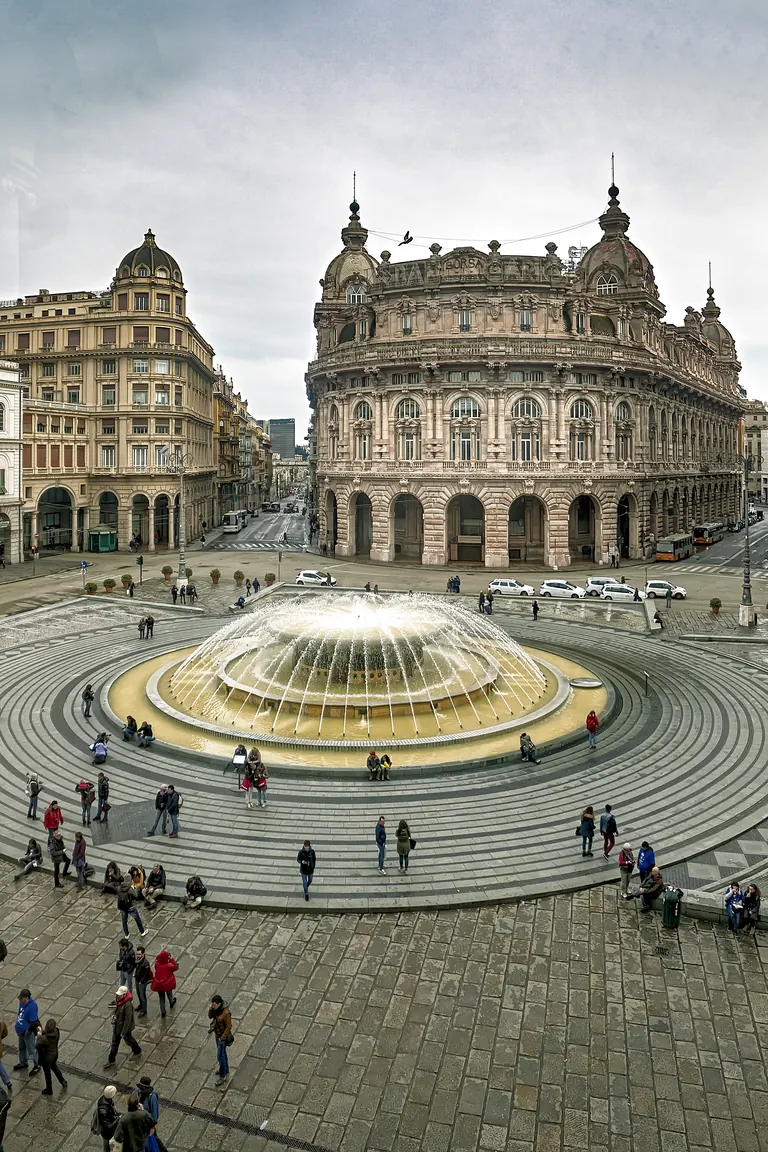
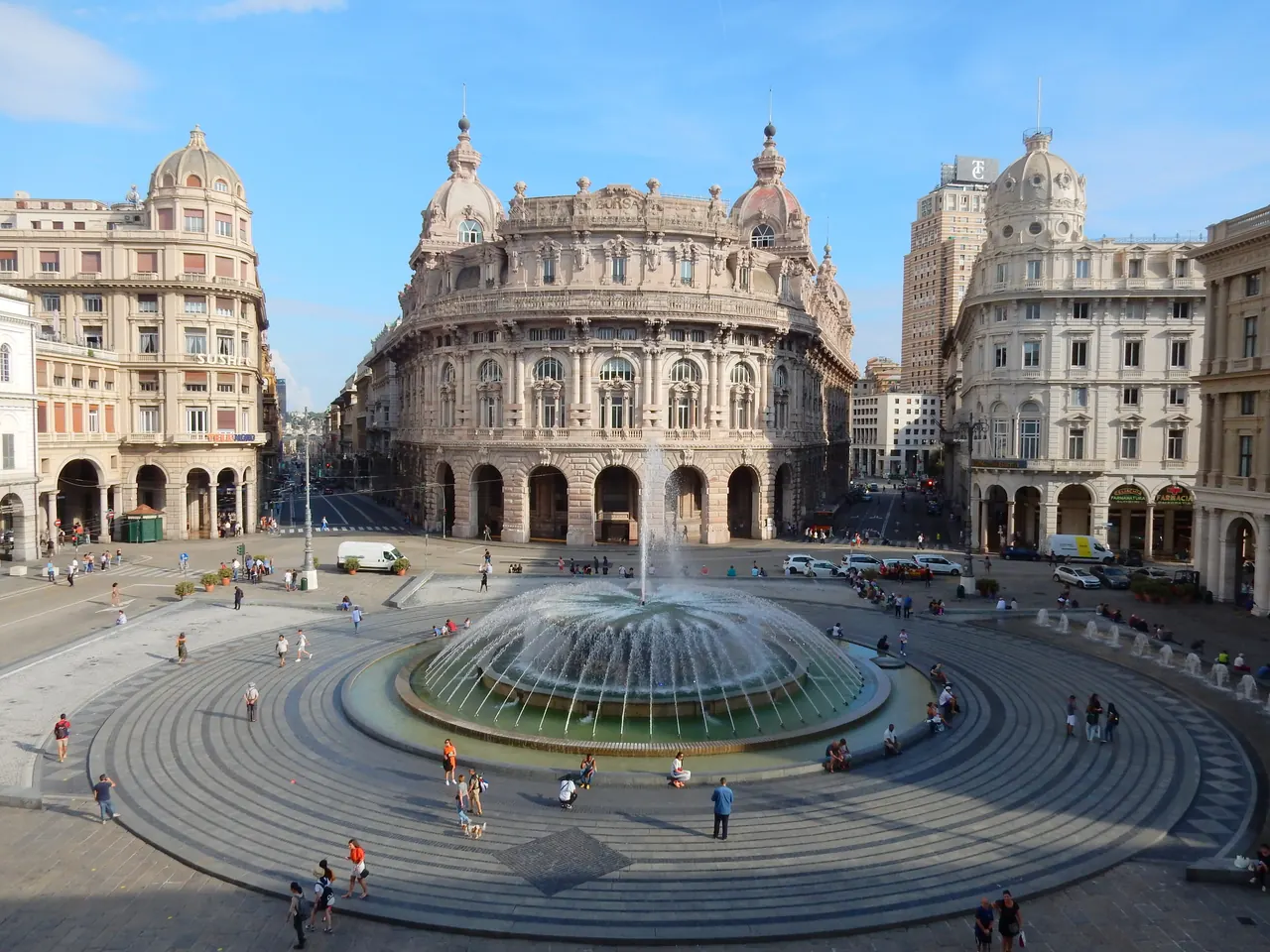
Piazza De Ferrari in Genoa seen from the Doge’s Palace, with the fountain and surrounding buildings
Central Genoa · Since the nineteenth century

Piazza De Ferrari

Genoa’s meeting place: a great bronze fountain, an opera house, the Stock Exchange and the Doge’s Palace, where the medieval city meets its modern counterpart.

Explore NikRooms accommodation

Photo: ValeDeNe / Teatroge · Wikimedia Commons · CC BY-SA 4.0 · resized and converted to WebP; mobile version cropped
Overview

Genoa’s main square

◆

Piazza De Ferrari is Genoa’s most important square: a large, irregular space of around 11,000 square metres, linking two different parts of the city. On one side lies the old town, on the other the nineteenth- and twentieth-century district; several main streets begin here, including Via XX Settembre and Via Dante.

It is named after Raffaele De Ferrari, Duke of Galliera, a nineteenth-century banker and philanthropist who donated a substantial sum towards extending the port in 1875. At its centre stands the monumental bronze fountain of 1936, now one of the city’s symbols.

Buildings of different periods surround it: the Neoclassical Teatro Carlo Felice and Accademia Ligustica di Belle Arti, a side wing of the Doge’s Palace, and the eclectic Stock Exchange and Regional Government buildings. It is also the city’s financial heart: banks and insurance companies once had their headquarters here, and the Genoese jokingly call the area ‘the City’.

1828

opening of the Teatro Carlo Felice

1912

the New Stock Exchange building is completed

1936

inauguration of the bronze fountain

36 t

the weight of the fountain’s great basin

Dates reported by historical and general-interest sources; sources differ on some events.

History

From a convent to the heart of the city

The square is not ancient: it was created in the nineteenth century on the site of a large religious complex and took more than a century to complete.

I
Early nineteenth century

The site of San Domenico

The San Domenico complex, a church and convent and the largest in the city, once stood where the square is today. After Genoa passed to the House of Savoy, the complex was demolished to make way for an opera house and a new square.

The project was entrusted to Carlo Barabino, the city’s chief architect. The Teatro Carlo Felice opened on 7 April 1828, and the Accademia Ligustica di Belle Arti was built between 1826 and 1831.
II
Late nineteenth century–1920s

The square of finance

In the second half of the nineteenth century, Genoa was, alongside Milan, Italy’s leading financial centre, and institutions filled the square: the Bank of Italy, Credito Italiano and the Stock Exchange. In 1875 Raffaele De Ferrari donated a substantial sum to extend the port, and the square was named after him.

The equestrian monument to Giuseppe Garibaldi dates from 1893, while in 1912 the New Stock Exchange created a dramatic link between the square and Via XX Settembre; the Credito Italiano building followed in 1914 and the Regional Government building in the 1920s. According to the Touring Club, the square was laid out between 1899 and 1923.

III
From 1936 to today

The fountain and renewal

In 1936 the bronze fountain was inaugurated at the centre. During the Second World War bombing almost entirely destroyed the Teatro Carlo Felice, leaving only the perimeter walls and Neoclassical façade; it was rebuilt to a design by Aldo Rossi and reopened in 1991.

In the 1990s a redevelopment scheme by German urban planner Bernhard Winkler pedestrianised much of the square and renewed its paving. The metro station opened in 2005, and between 2018 and 2020 the fountain’s side jets were restored.

Timeline
1820s

The demolition of San Domenico

The large religious complex is demolished to make way for the new theatre and square.

1828

The Teatro Carlo Felice

The opera house designed by Carlo Barabino opens on 7 April.

1826–1831

The Accademia Ligustica

Barabino also builds the Accademia Ligustica di Belle Arti beside the theatre.

1875

The Duke’s donation

Raffaele De Ferrari, Duke of Galliera, donates a large sum towards the port extension works.

1893

The Garibaldi monument

The equestrian monument marking the corner between the theatre and the Academy dates from this year.

1912

The New Stock Exchange

A large eclectic building links the square to Via XX Settembre.

1914 · 1920s

Credito Italiano and the Regional Government building

The other large buildings enclosing the square are completed.

1936

The fountain

The great circular bronze fountain, a gift from the Piaggio family, is inaugurated.

1991

The Carlo Felice is reborn

After wartime damage, the theatre reopens following Aldo Rossi’s reconstruction.

2005

The metro

De Ferrari station opens on 4 February.

2018–2020

The side jets flow again

The ‘hedges of water’ system is restored, and the refurbishment concludes in early 2020.

The bronze fountain in Piazza De Ferrari
The bronze fountain. Graziella taibi · Wikimedia Commons · CC BY-SA 4.0 · resized and converted to WebP
The fountain

A gift to the city

◆

The fountain began as a gift: according to architect Patrizia Pittaluga’s account, when banker Erasmo Piaggio’s will was read, his son Carlo learnt of his father’s wish to give Genoa something lasting, and commissioned architect Giuseppe Crosa di Vergagni to design it.

The great bronze basin, weighing 36 tonnes, arrived by sea and, being unable to fit through the narrow caruggi, was brought to the square along Via XX Settembre. The inauguration took place on 24 May 1936, a day of celebration for the Genoese, who threw coins into it as at the Trevi Fountain: the first cleaning yielded 5,000 lire, donated to charity.

An inscription on the side facing the Teatro Carlo Felice still commemorates the gift and its date. Over time, new water features and an additional pool were added, while the side jets were restored between 2018 and 2020.

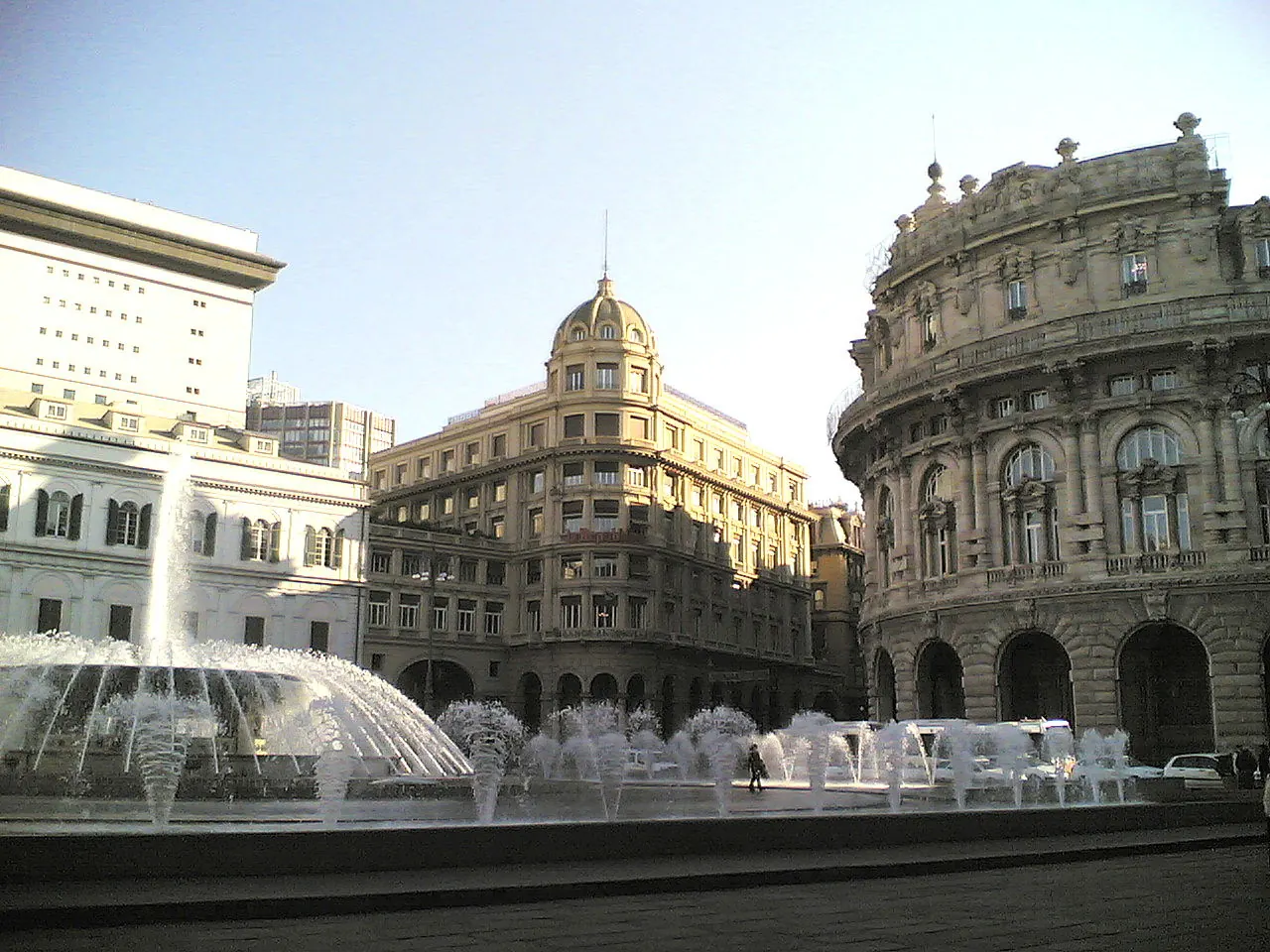
The fountain with the old Stock Exchange, Teatro Carlo Felice tower and Accademia Ligustica in the background
The fountain with the Teatro Carlo Felice tower in the background. Photo: Twice25, CC BY 2.5 · Twice25 · Wikimedia Commons · CC BY 2.5 · resized and converted to WebP
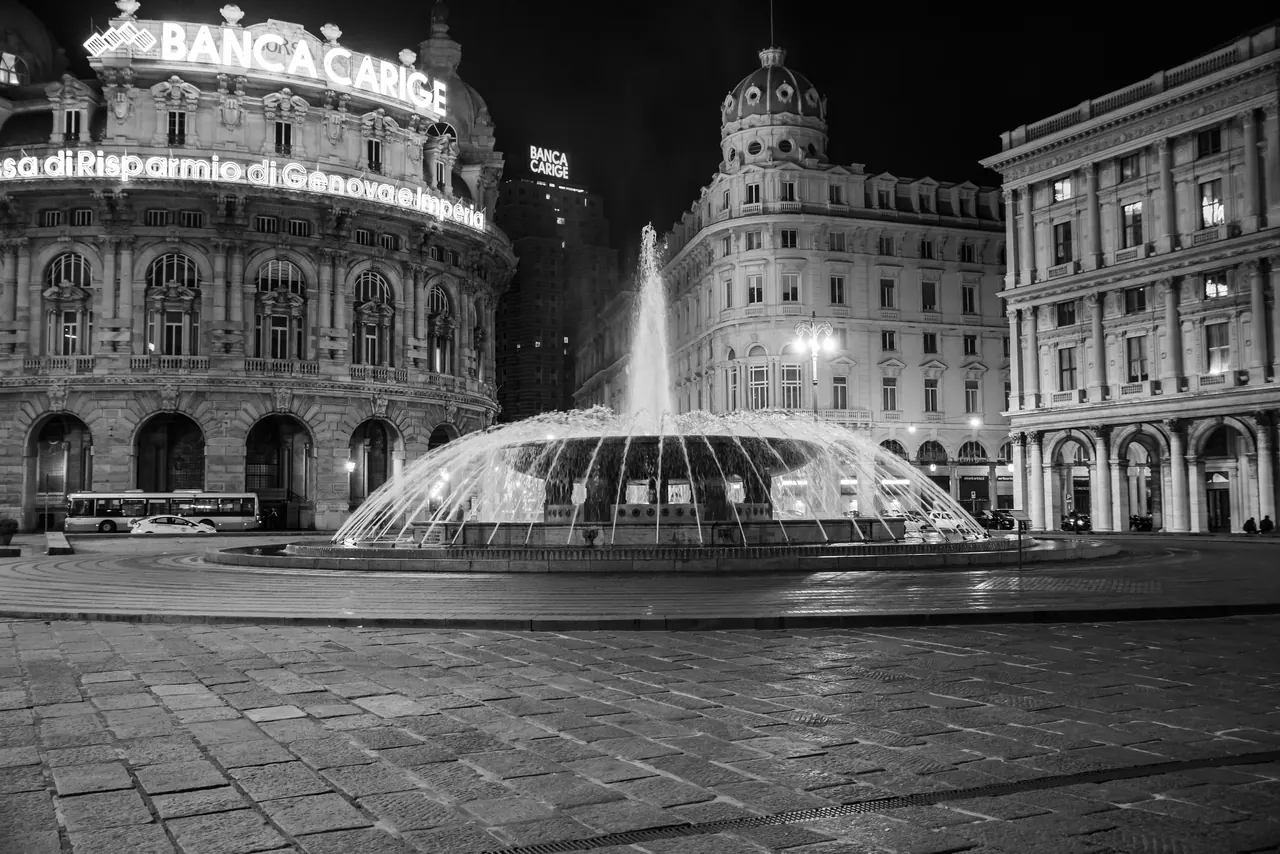
Piazza De Ferrari’s fountain illuminated at night
The fountain at night. Alessandro.photographer · Wikimedia Commons · CC BY-SA 4.0 · resized and converted to WebP
How it once looked

The square of trams and the Stock Exchange

◆

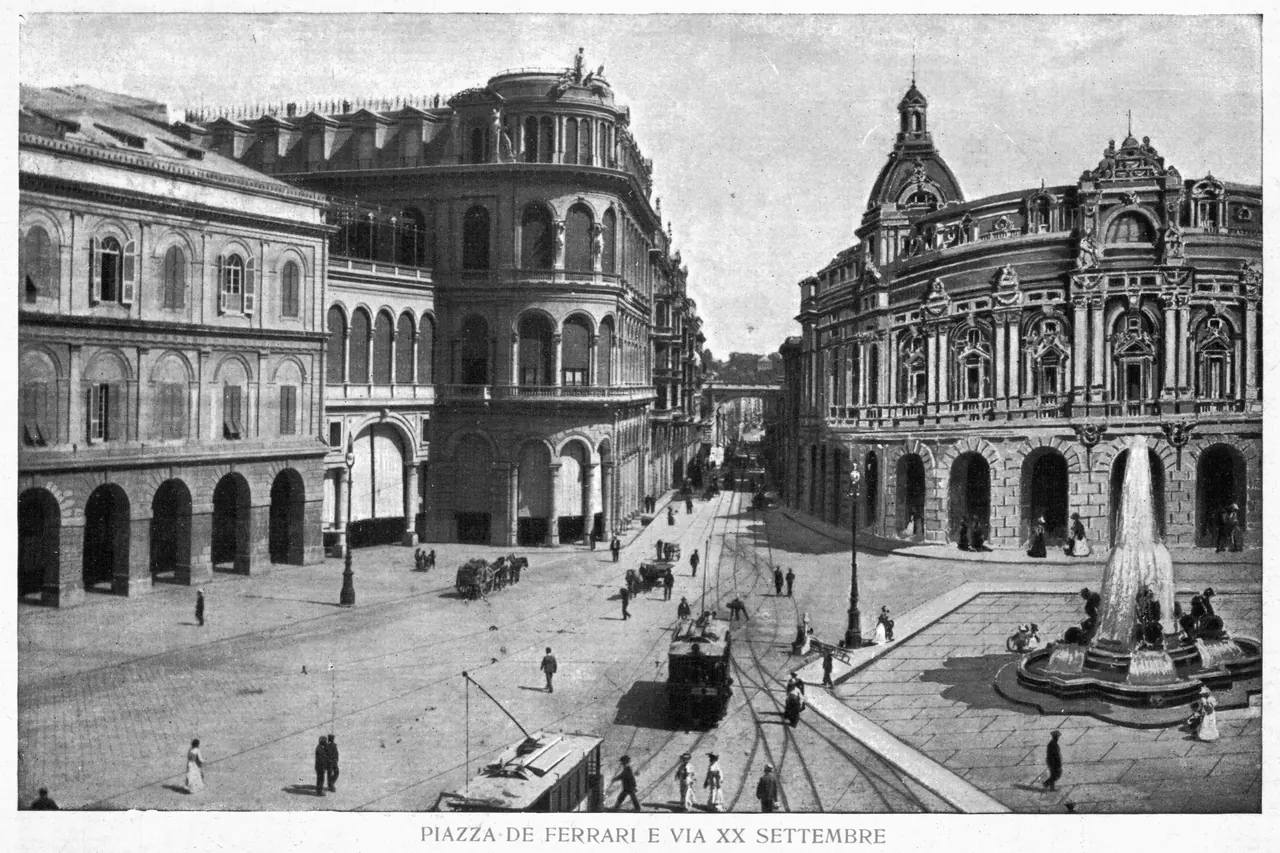
A historic photograph, taken after 1900, shows the square with Via XX Settembre, trams and the Stock Exchange building: an image that helps explain how this part of the city became its business centre around the turn of the twentieth century.

Its layout has remained recognisable since then, but the square has changed considerably: the 1936 fountain reshaped its centre, and pedestrianisation returned the space to people on foot.

Historic image of Piazza De Ferrari with trams and Via XX Settembre
Piazza De Ferrari in a historic image. Unknown author, CC BY 3.0 · Unknown author · Wikimedia Commons · Public domain · resized and converted to WebP
The square’s palaces

Six façades, six eras

The square is a showcase of styles, from Barabino’s Neoclassicism to the eclectic architecture of the early twentieth century.

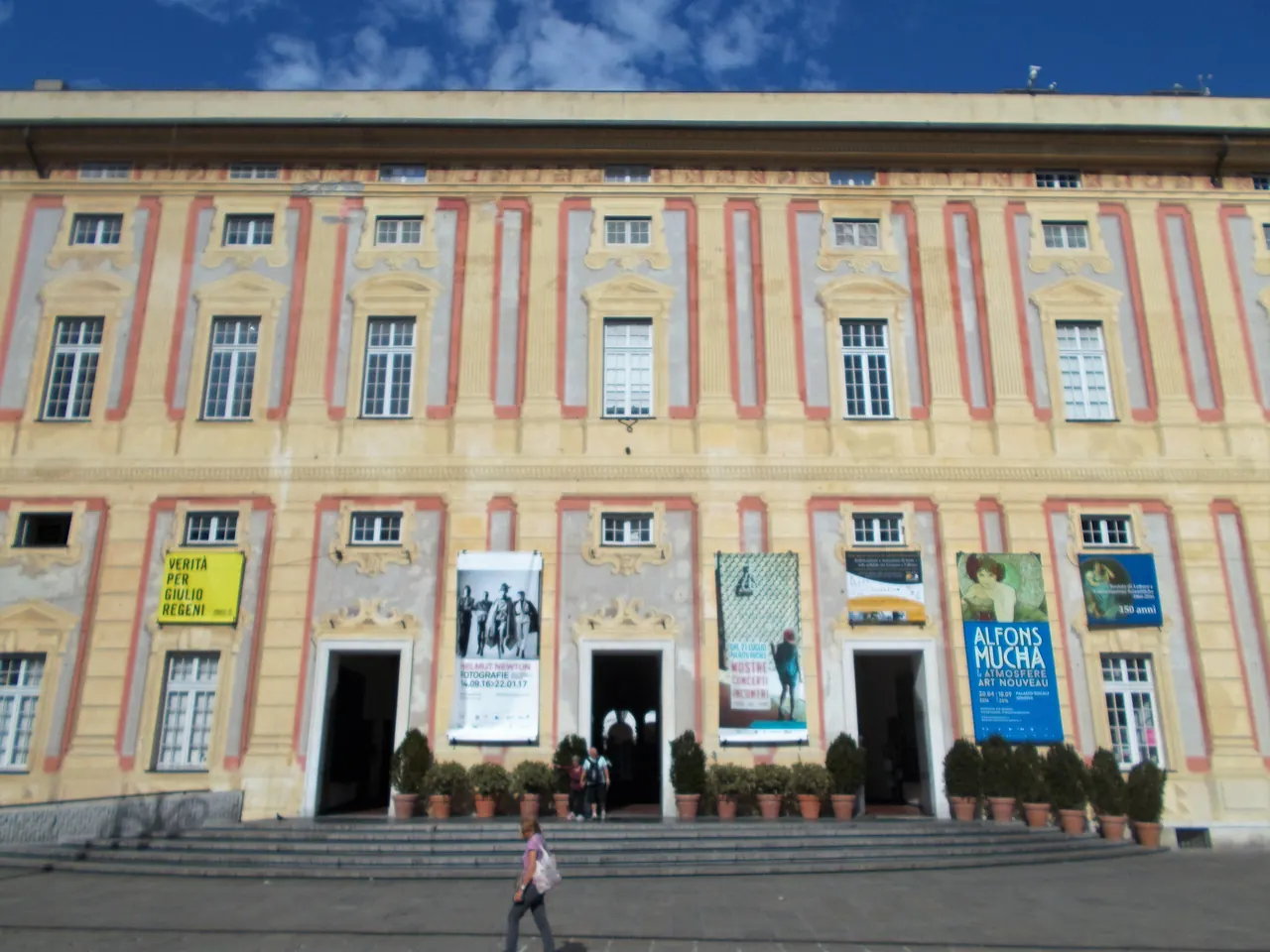
Doge’s Palace

The former seat of the doges faces the square with a side wing; its main entrance is on Piazza Matteotti. Today it is a cultural centre hosting exhibitions and events.

Teatro Carlo Felice

Genoa’s opera house, designed by Carlo Barabino and opened in 1828. After wartime damage it was rebuilt by Aldo Rossi, with a fly tower that defines the skyline.

Accademia Ligustica di Belle Arti

Built by Barabino between 1826 and 1831, it contains a double-flight staircase leading to the Academy’s museum. It stands at the corner by the Garibaldi monument.

New Stock Exchange building

Completed in 1912 in an eclectic style, it connects the square with Via XX Settembre. It reflects the area’s financial role; sources attribute the design to different architects, including Dario Carbone.

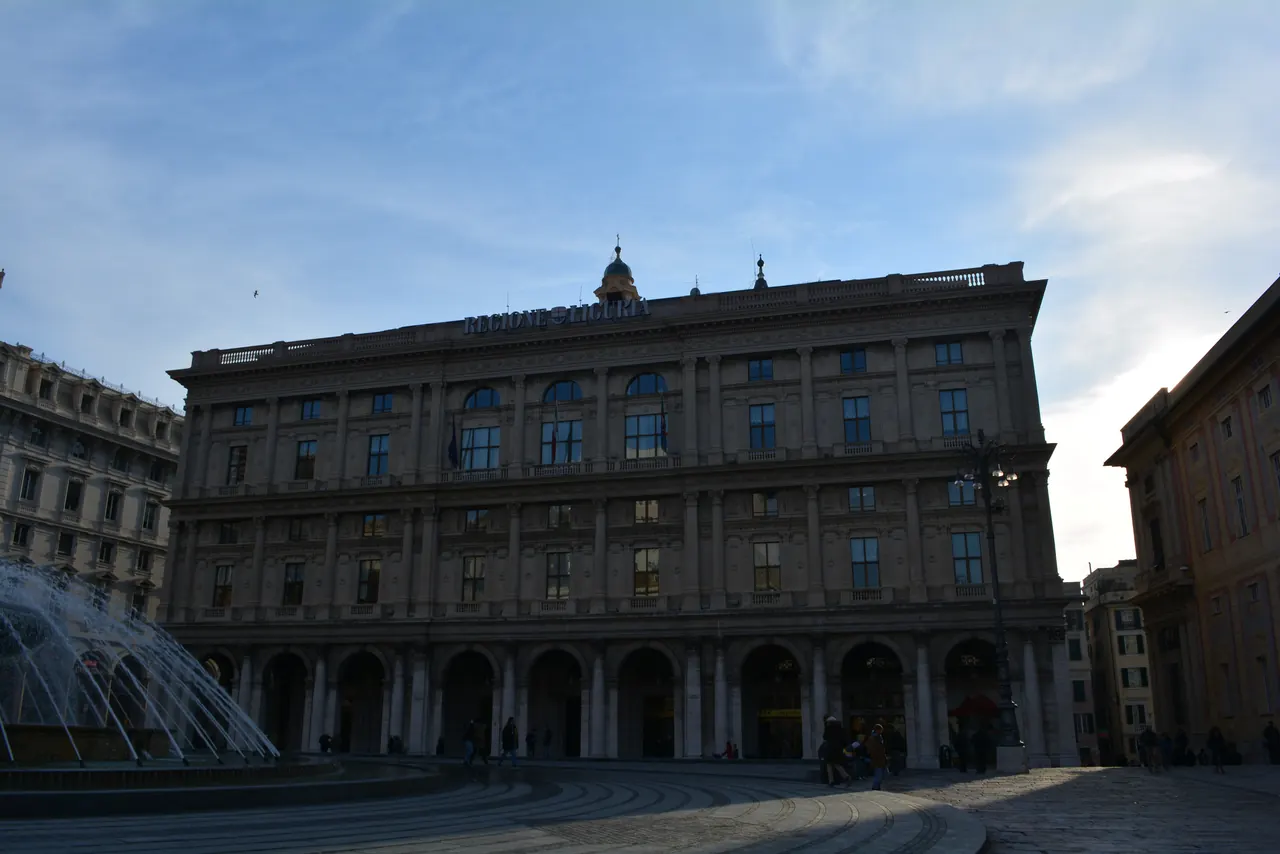
Liguria Regional Government building

Built in the early 1920s in a Neo-Mannerist style as the headquarters of Navigazione Generale Italiana, it now houses the offices of the Liguria Region.

Bank of Italy and Credito Italiano

Among the buildings facing the square are the Genoa offices of the Bank of Italy and the Credito Italiano building (1914), reminders of this area’s financial vocation.

The Doge’s Palace seen from Piazza De Ferrari
The Doge’s Palace seen from the square. Baroxer · Wikimedia Commons · CC BY-SA 4.0 · resized and converted to WebP
The Liguria Regional Government building in Piazza De Ferrari
The Liguria Regional Government building. Alessandro.di · Wikimedia Commons · CC BY-SA 4.0 · resized and converted to WebP
The Teatro Carlo Felice seen from the Liguria Regional Government building
The Teatro Carlo Felice. Domenico Lucà · Wikimedia Commons · CC BY-SA 4.0 · resized and converted to WebP
Did you know?

Things you may not know

36 t

A basin too large for the caruggi

The great bronze basin arrived in Genoa by sea. As it could not fit through the narrow caruggi, it was taken to the square along Via XX Settembre.

5,000

Coins from the first cleaning

At the inauguration, the Genoese treated the fountain like the Trevi Fountain: its first cleaning yielded 5,000 lire in coins, which were donated to charity.

The City

The business district

Banks, insurance companies and businesses still have offices around the square, which is why the Genoese jokingly call it ‘the City’.

Wing

The Doge’s Palace from the side

Viewed from the square, only a side wing of the Doge’s Palace is visible: the main entrance is on the other side, in Piazza Matteotti.

1828 · 1991

A theatre opened twice

The Carlo Felice, opened in 1828, was almost destroyed by Second World War bombing; Aldo Rossi’s reconstruction retained the old building’s Neoclassical façade and portico.

1875

The generous Duke

The square bears the name of Raffaele De Ferrari, Duke of Galliera, who donated a substantial sum towards extending Genoa’s port in 1875.

Useful information

Getting here and what to see nearby

Piazza Raffaele De Ferrari
16121 Genoa

Piazza De Ferrari is in central Genoa and easy to reach: De Ferrari metro station, opened in 2005, is right here, and trolleybus routes also serve the square. Much of the space is pedestrianised.

Visit Genoa information

The square is always accessible; the Teatro Carlo Felice, Doge’s Palace and Accademia Ligustica each have their own opening times and ticket arrangements, which vary with performances and exhibitions: check their websites before visiting.

Do not miss

  • the bronze fountain, including in the evening;
  • the Neoclassical façade of the Teatro Carlo Felice;
  • the New Stock Exchange and Regional Government buildings;
  • the wing of the Doge’s Palace facing the square;
  • the Accademia Ligustica di Belle Arti.

A short walk away are the Doge’s Palace and San Lorenzo Cathedral. Beside the theatre begin Via Roma, with the Galleria Mazzini, and Via XXV Aprile; from here it is easy to continue on foot into the old town.

Before your visit

For admission, any booking requirements and up-to-date information, consult Visit Genoa — Piazza De Ferrari.

Where to stay when visiting Piazza De Ferrari in Genoa

The estimated walk from San Carlo to Piazza De Ferrari is about 1.3 km. San Luca is in the old town, a convenient base for planning a visit to the square and cathedral.

The distances given are estimated walking distances and may vary depending on the route and entrance chosen.

Choose your accommodation in Genoa

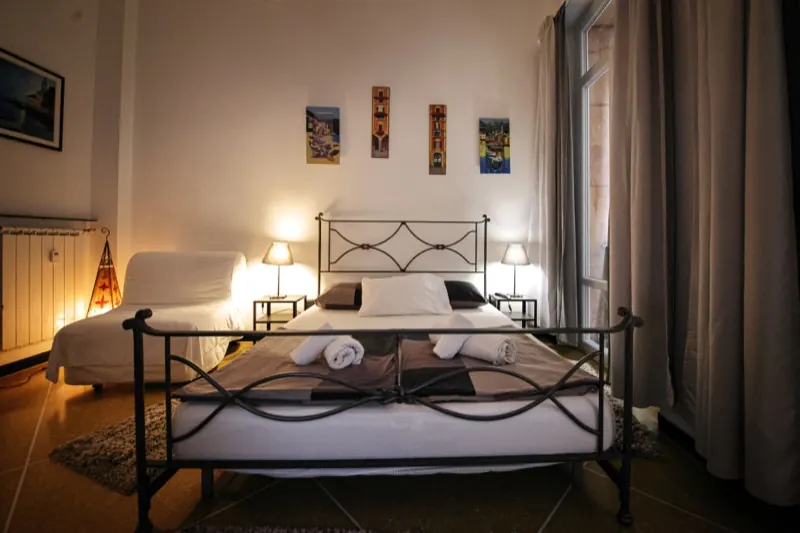
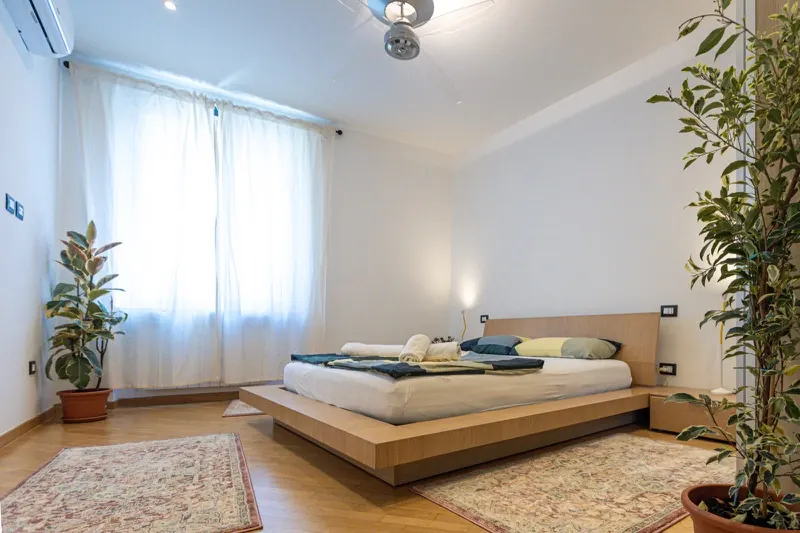
San Luca 1 – Budget Comfort — San Luca, Genoa

Rooms and studio

San Luca

Three rooms and a studio with a fully equipped kitchen: choose the option that suits your stay at San Luca.

Up to 3 guests per unit

View accommodation
San Carlo Apartment — San Carlo, Genoa

Apartment

San Carlo

An apartment with a bedroom, living room and separate kitchen, for guests looking for more space during their stay in Genoa.

Up to 5 guests

View accommodation

Plan your stay in Genoa

Tell us your dates, number of guests and preferred accommodation: we will confirm availability and the price by email.

info@nikrooms.com · +39 375 622 2446 · WhatsApp

Your request opens in your email app. Pets are not permitted.

Sources and credits

Information drawn from Visit Genoa, Touring Club Italiano, Wikipedia, Mentelocale, Guida di Genova and other general-interest sources, and freely reworded. Some details vary by source: the fountain’s inauguration date (24 May 1936 according to the inscription and Mentelocale, April according to other sources), architect Crosa di Vergagni’s first name (Giuseppe or Cesare), the Stock Exchange’s designer (Dario Carbone or Coppedè), the year of the Regional Government building and the year the square received its name.

The photographs are hosted on this website in WebP format and in several sizes. Authors, sources and licences are given alongside each image. Modifications: resizing and conversion to WebP; the cover image has a cropped mobile version, and the displayed crop depends on the screen. This is an unofficial page for information purposes.

Availability inquiry

Your inquiry opens in your email app. We confirm availability and price by reply.